
Route from Kyrgyzstan
Compare flights from Bishkek, connections, arrival airports, and transfers. Estimated flight duration: 3–5 nights; 6–8 with Mtskheta and Kakheti.


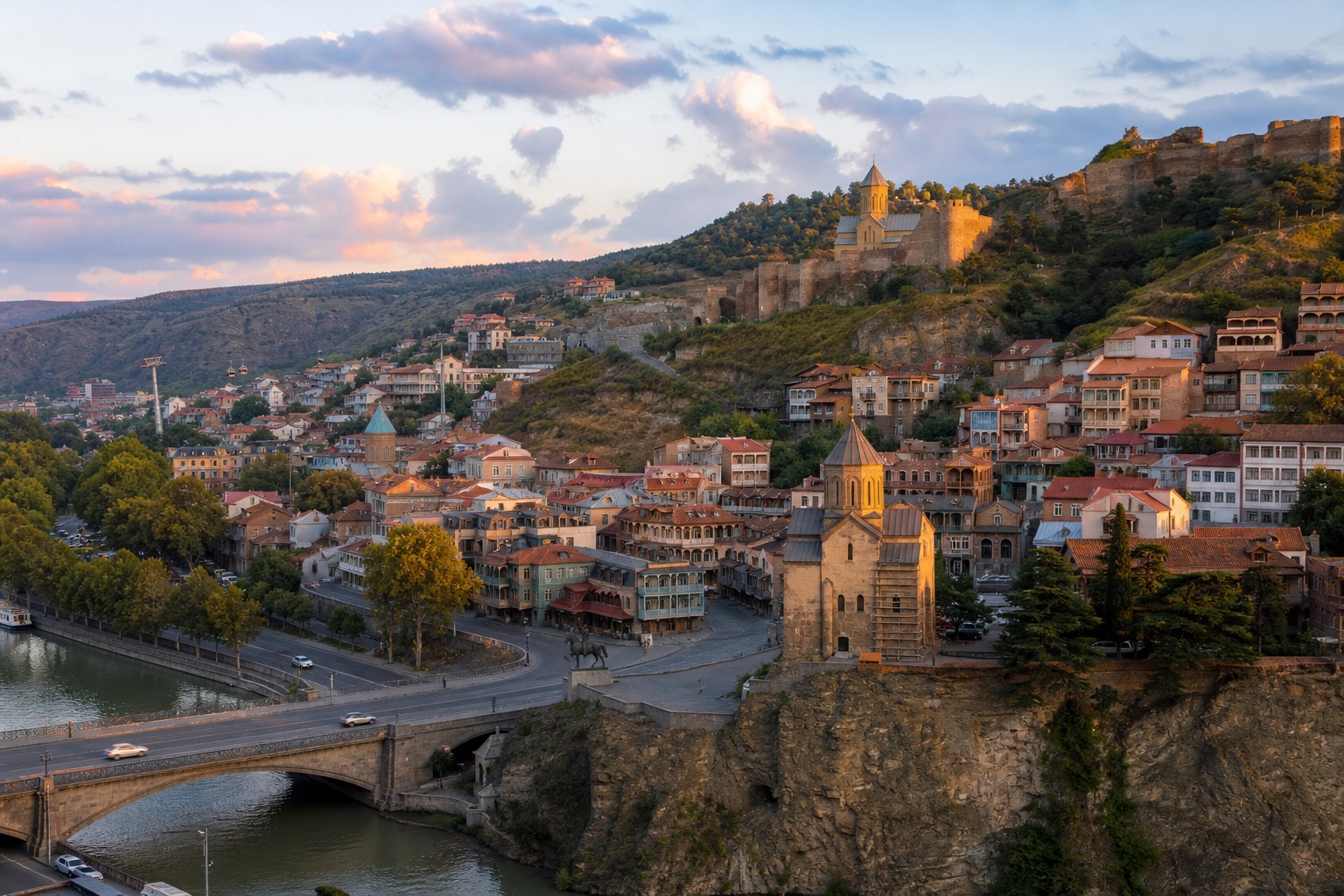
Old town, sulfur baths, panoramic hills and rich gastronomy
Tbilisi combines old quarters, modernist architecture, markets, museums, and restaurants. The terrain significantly influences the trip: an atmospheric hillside address can mean a steep daily climb, so it's important to check the route map before booking.
The capital is convenient as a standalone destination or as the starting point for a Georgia itinerary. Mtskheta can be visited in one day, while Kakheti and Kazbegi are best planned with an overnight stay if you want to see the region without a long return trip in the evening.
The climate ranges from humid subtropical coastal to alpine zones. Conditions in Tbilisi, Batumi, and the mountains can vary greatly in a single season.
For relaxation V Tbilisi Compare the route from Kyrgyzstan, season, region, hotel location, and included services. This will make it easier to choose a tour that fits your budget and travel plan.
Compare flights from Bishkek, connections, arrival airports, and transfers. Estimated flight duration: 3–5 nights; 6–8 with Mtskheta and Kakheti.
Old Town and Abanotubani. The main walking routes and baths are nearby, but there are stairs, noise and difficult access. Compare this option with other areas of the resort before choosing a hotel.
Check the elevation change and the actual walking distance. Check for soundproofing, elevator and taxi access.
The layout of the districts, beaches, transportation, food, and travel itinerary are the most important things to know before choosing a tour.
Old Tbilisi is located on slopes: the shortcut on the map may involve stairs and a steep climb. For daily walks, compare the elevation, street surfaces, car access, and the nearest metro station.
Abanotubani and Sololaki offer a historical atmosphere, Rustaveli offers museums and transportation, Vera offers cafes, and Avlabari offers views and metro access. It's best to spend a day exploring the neighboring neighborhoods, avoiding crossing the city after each stop.
Restaurants in the tourist center are convenient, but a culinary itinerary should be complemented by a market and establishments off the main streets. Sulfur baths vary in room format, water temperature, and service offerings, so popular times are best reserved in advance.
Mtskheta is suitable for a short trip, while Kakheti and Kazbegi require a separate day or overnight stay. A consistent itinerary reduces repeat trips and leaves ample time for mountain weather.
The photographs show different aspects of the destination: the coast, the natural landscape, the urban environment and the nature of the trip outside the hotel.
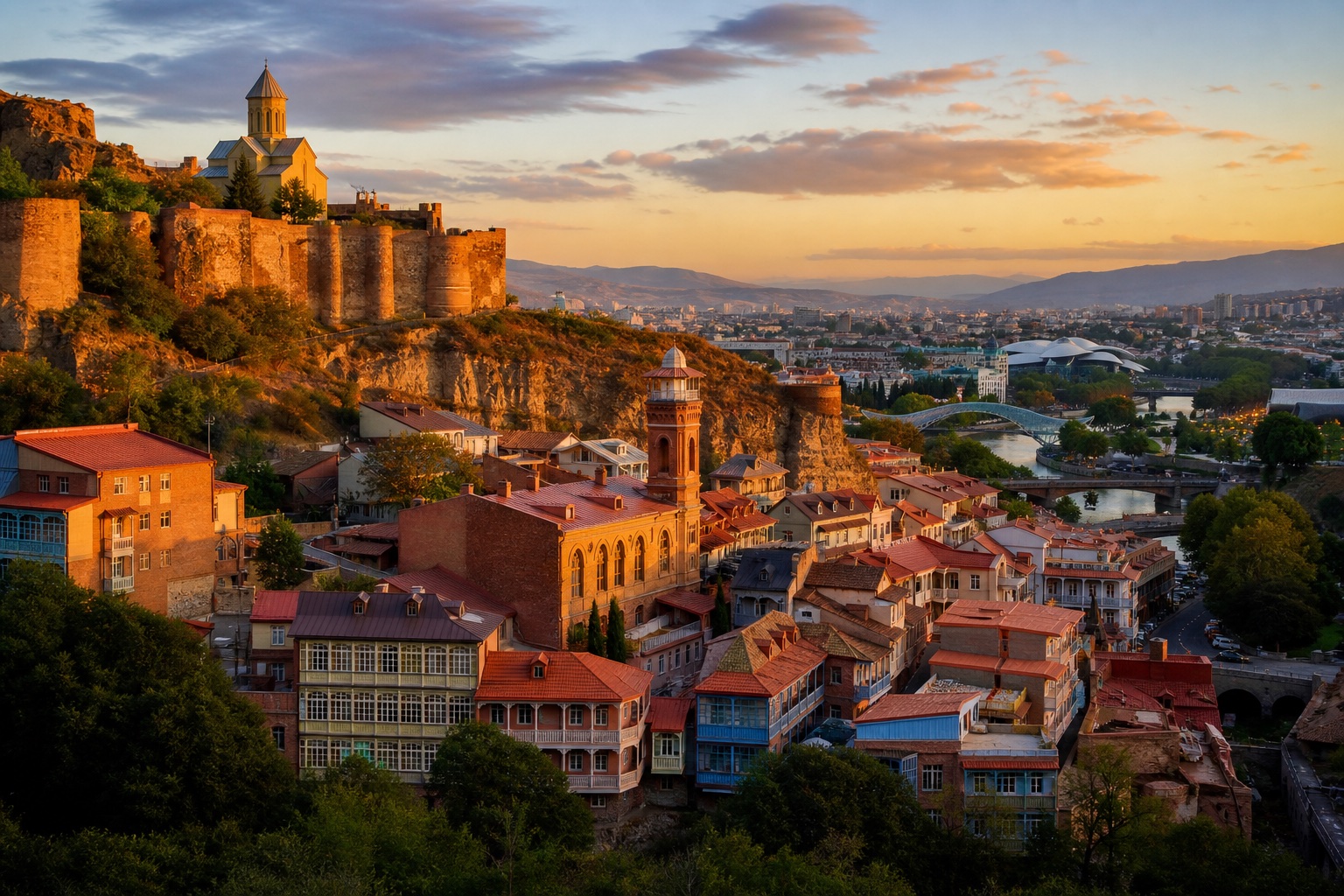
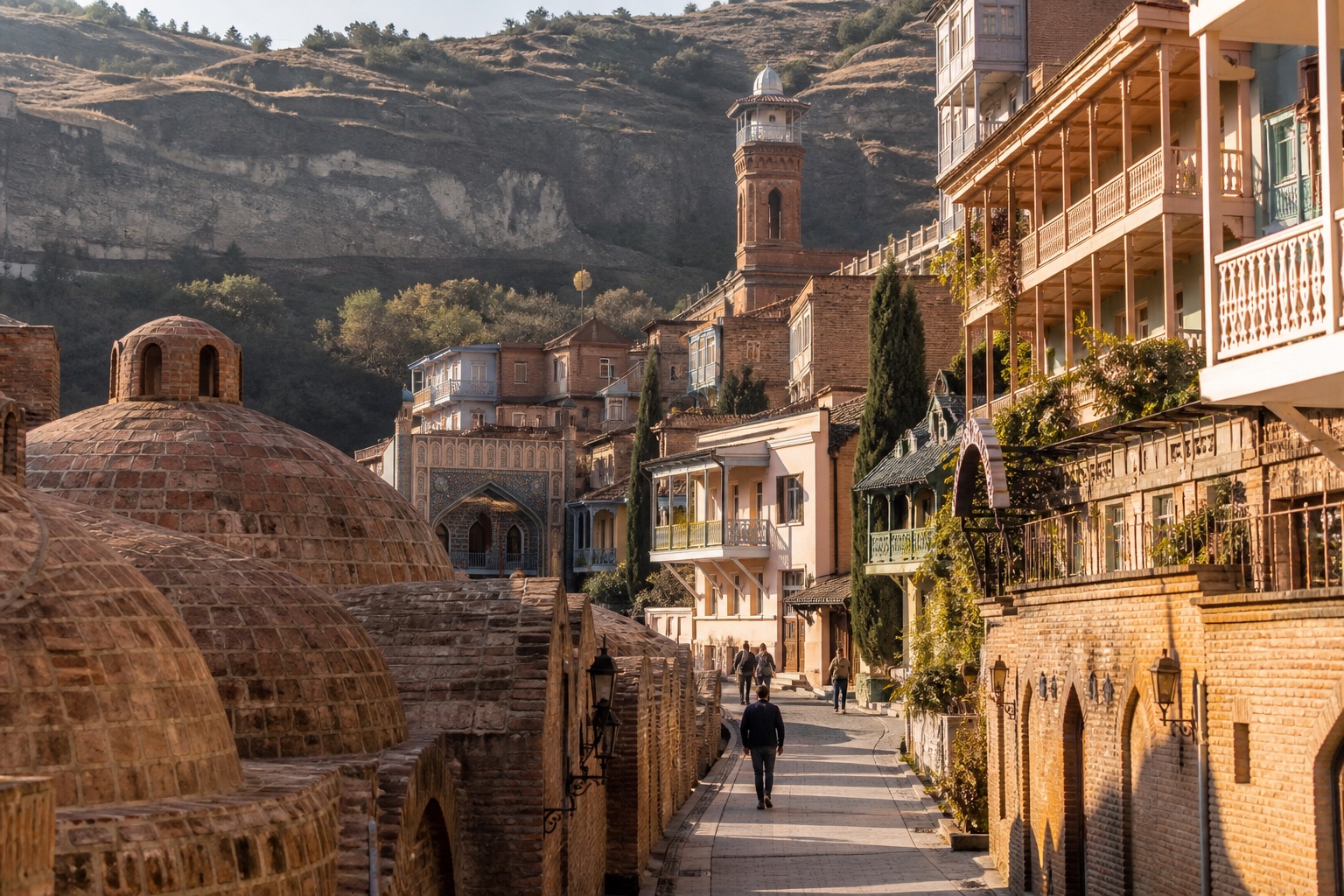
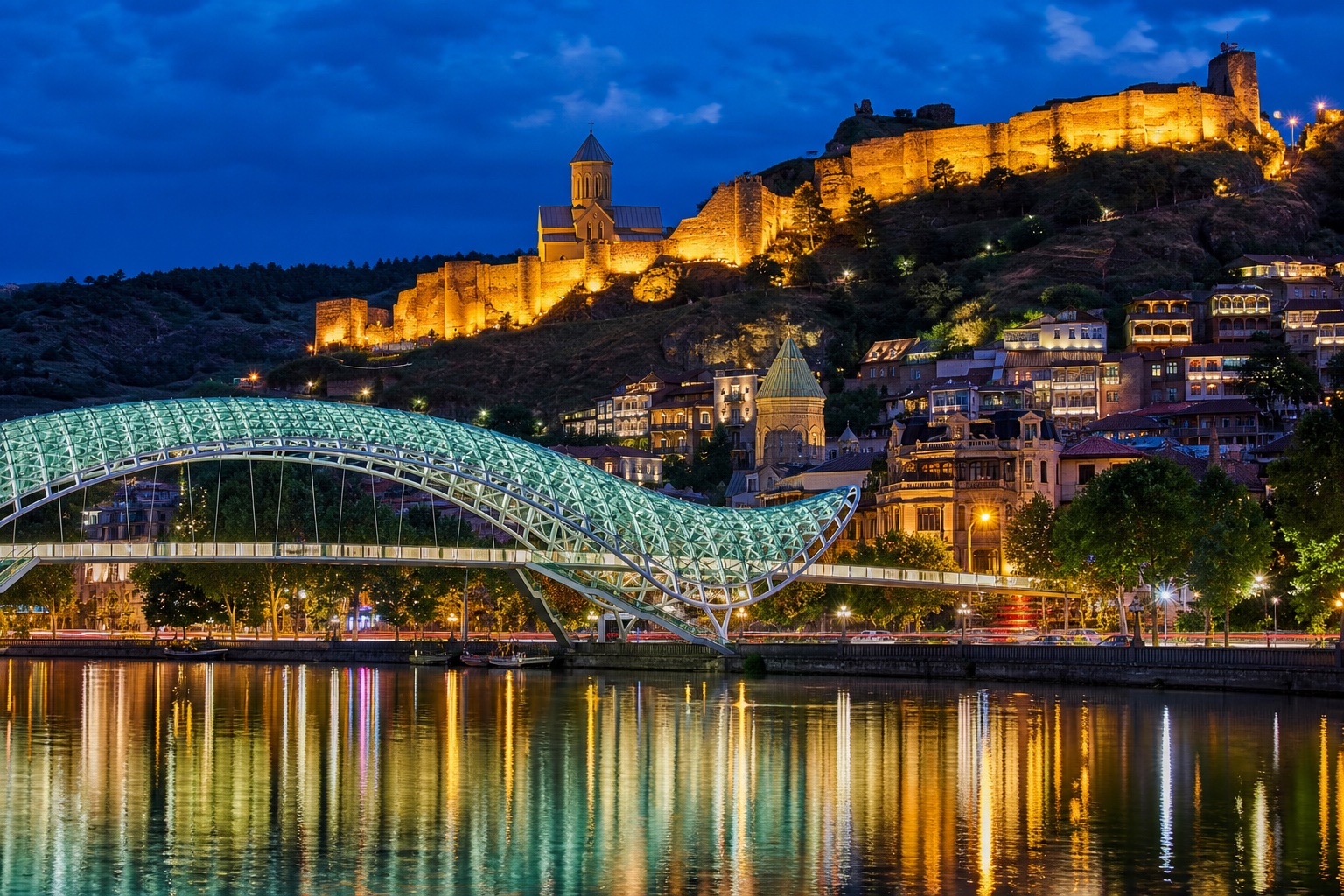
A ready-made guide for planning: what to include in the itinerary and what details to clarify before booking and departure.
A panorama of Old Tbilisi, the Narikala Fortress, and the Kura River at dawn
Sulfur bath domes, carved balconies, and the Abanotubani gorge in Tbilisi
The Bridge of Peace, the Kura River, and the illuminated Narikala Fortress in the evening
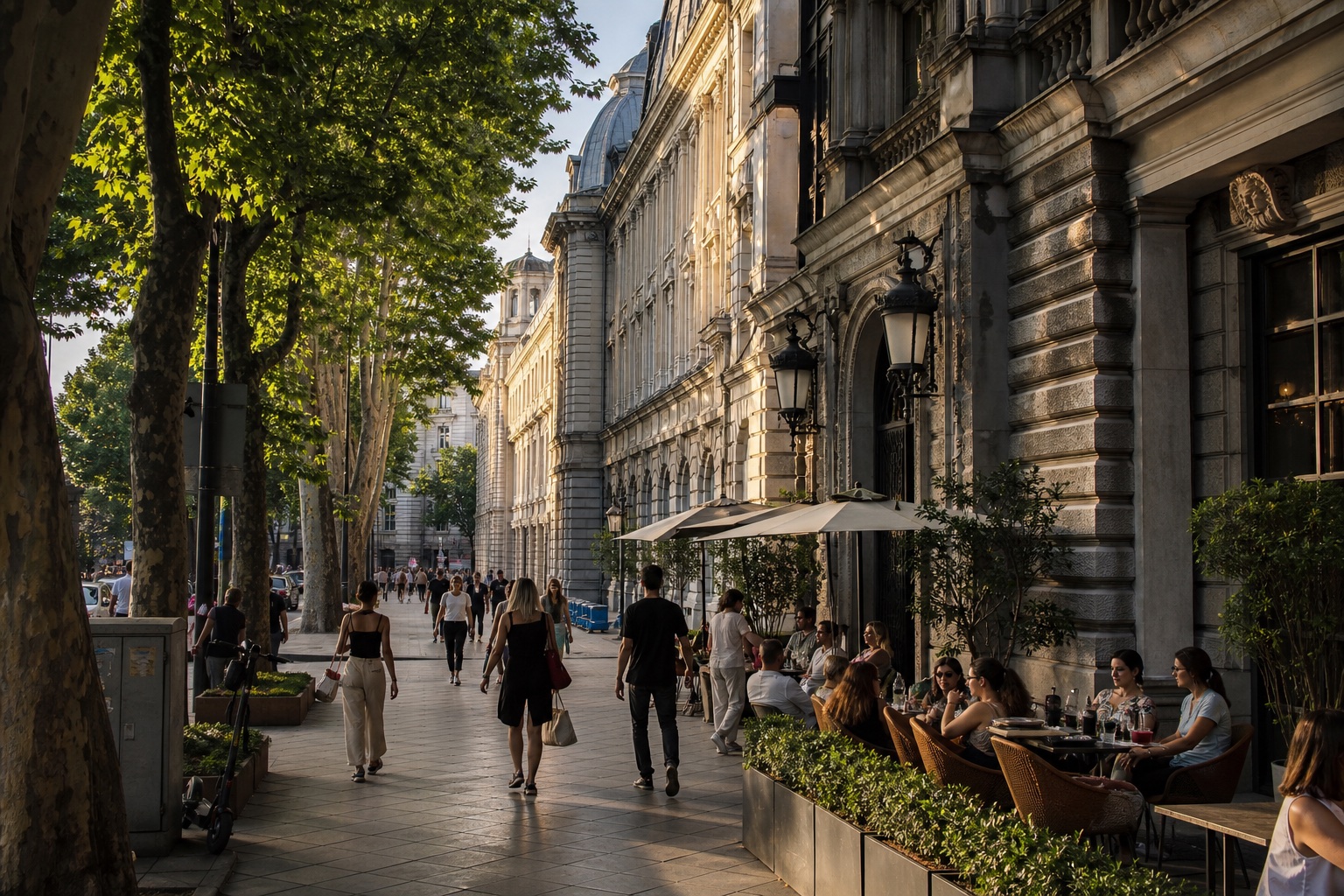
Historic buildings, trees, and street cafes on Rustaveli Avenue
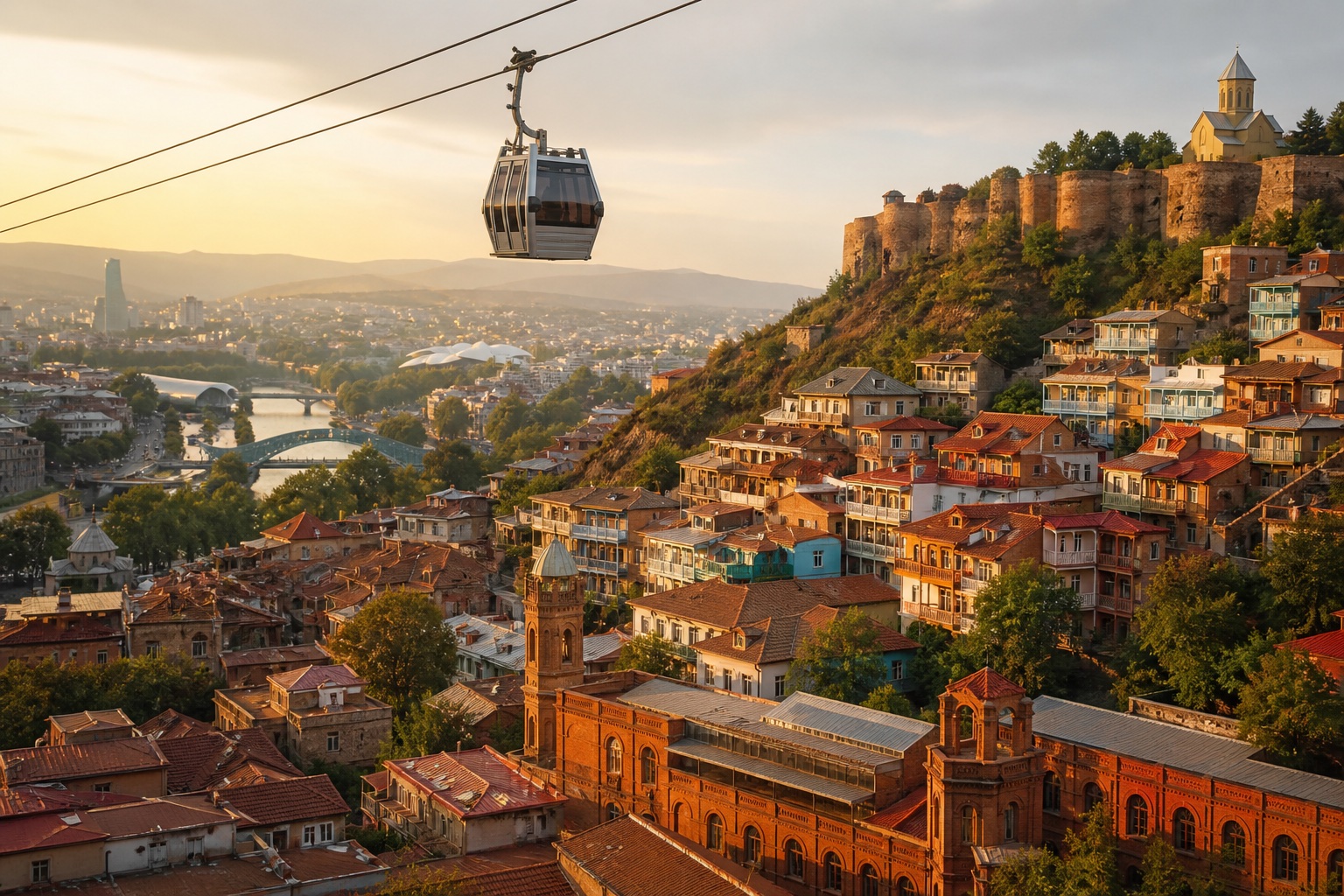
A cable car over the rooftops of Old Tbilisi on the way to Narikala
In summer, the daytime heat makes morning and evening walks more comfortable.
For popular sulfur baths, it is best to book a private room in advance.
Plan your trips out of town by district, rather than combining opposite directions.
Leave some extra space between the train station, bus stations and the airport.
Compare areas by atmosphere, infrastructure and holiday format before choosing a specific hotel.
The main walking routes and baths are nearby, but there are stairs, noise and difficult access.
Museums, cafes and a comfortable urban environment with good connections between districts.
There are more budget options and easier transportation, but the quality of the streets varies by neighborhood.
Greenery and comfortable cities; high-mountain roads may open later.
The sea in Batumi, hiking and coolness in the mountains; Tbilisi can be hot.
Warm weather, grape season and convenient cultural routes.
Gudauri, Bakuriani, and ski resorts; the cities are quieter and cooler.
The hotel category does not replace the verification of the beach, location, room and actual included services.
Check the elevation change and the actual walking distance.
Check for soundproofing, elevator and taxi access.
Check the distance to the metro if you are planning an active program.
This is a guide for a logical trip: the exact order depends on the length of the tour, the season, and the time of arrival.
Abanotubani, fortress, Sololaki and evening panorama without long journeys.
Rustaveli, a museum of interest, a market and a selected gastronomic district.
Mtskheta or a quiet free day before continuing your route across the country.
Turayka will take into account the traveler mix, budget, diet, and hotel requirements. If automatic selection isn't enough, a specialist will step in.
April–June and September–October are generally comfortable for walking. Summer is hotter, winter is calmer, but some of the countryside program depends on the weather.
Three full days cover the main areas, five allows for the addition of museums, Mtskheta, and a more relaxed pace.
The Old Town is more atmospheric, while the areas near Rustaveli and the metro are more convenient for daily commutes. The decision depends on your willingness to walk uphill.
Typically, not in the city. For regional routes, a rental or private transfer is useful, but parking in the city center can be inconvenient.
Yes, for the atmosphere and evening strolls, if you're okay with the terrain and possible noise. For active travel, the area near the metro is more practical.
Use only designated drinking sources and take individual sensitivities into account; bottled water remains the most reliable option.
Describe your dates, travelers, and vacation preferences—Turaika will prepare options for review.